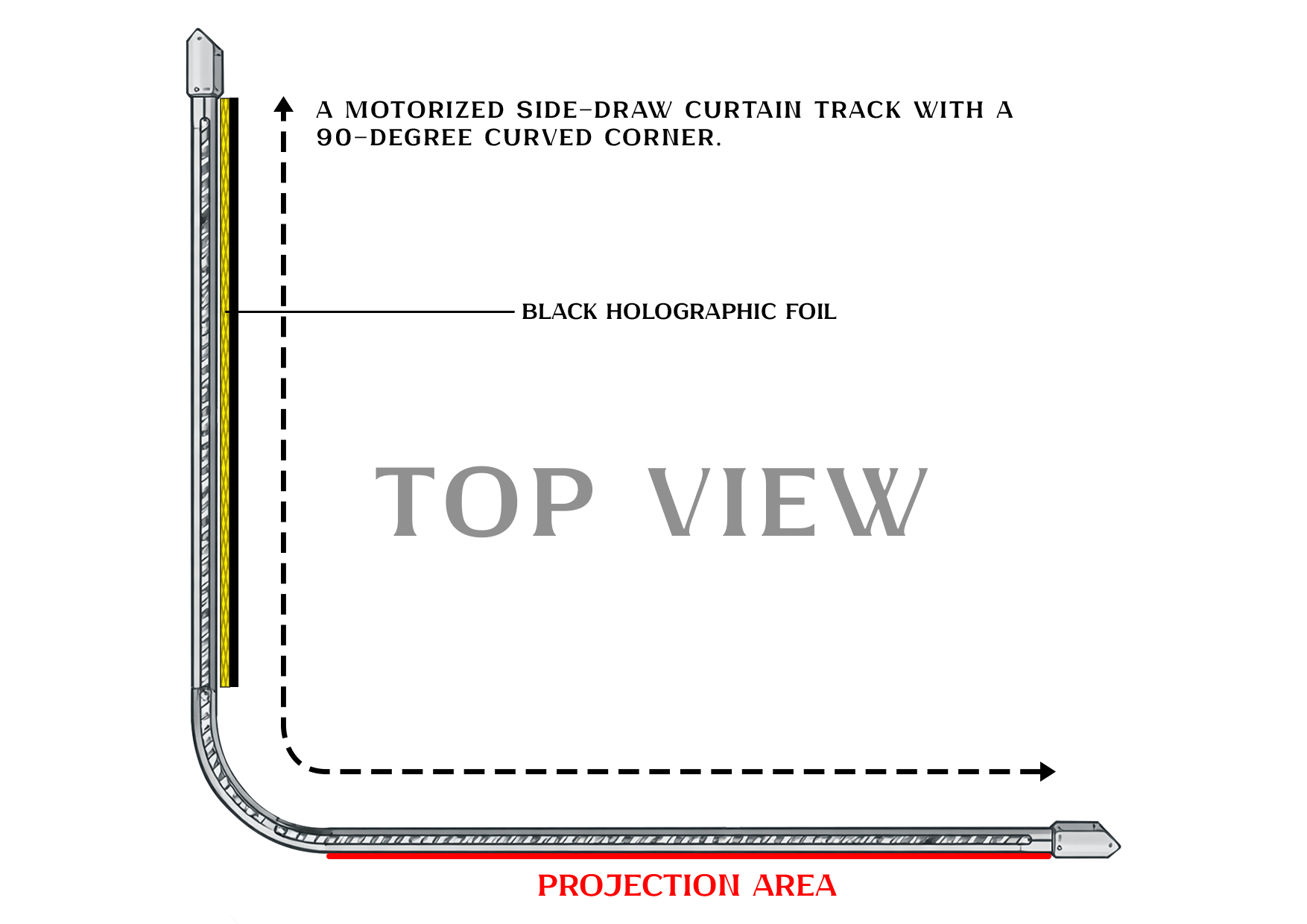
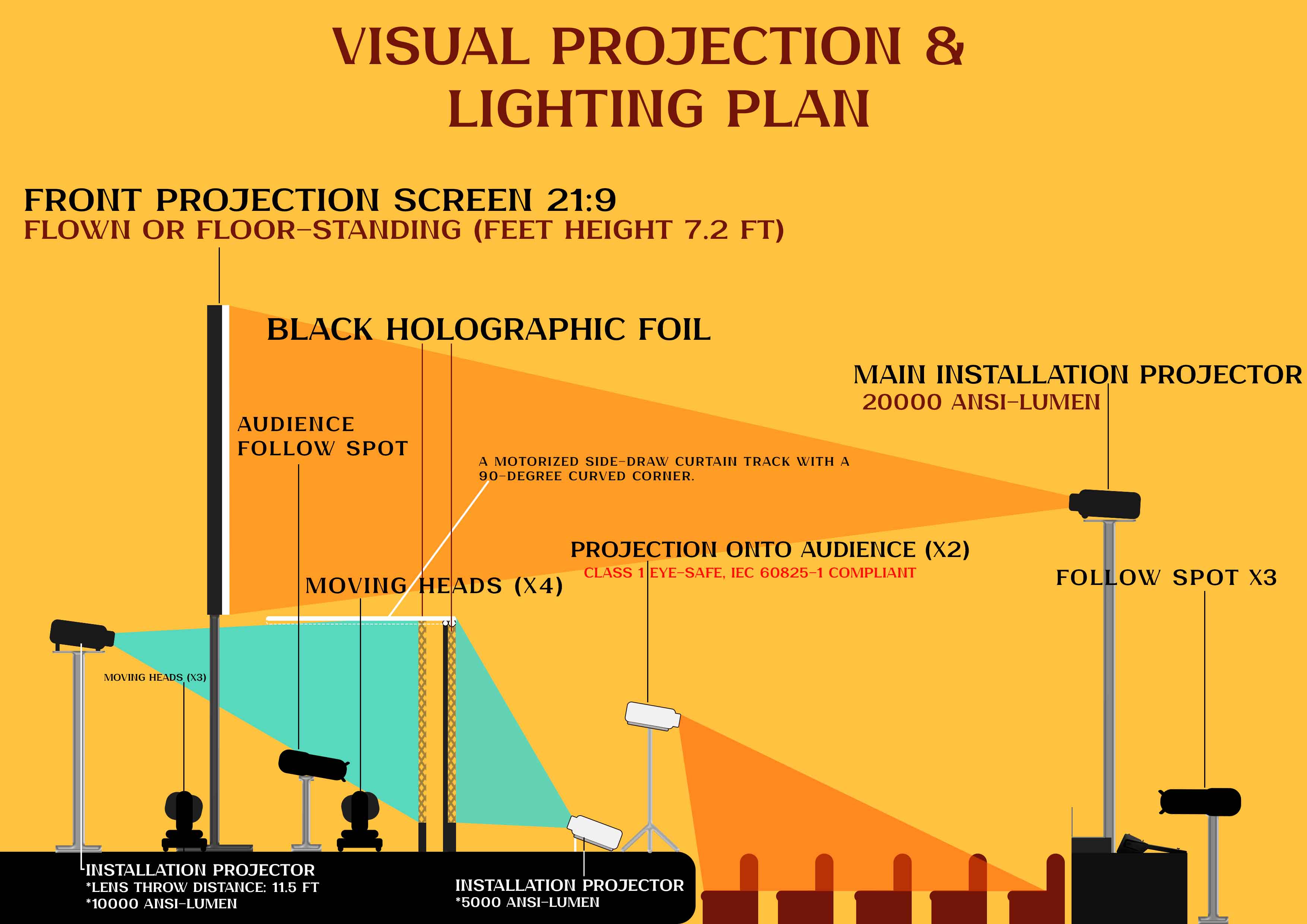
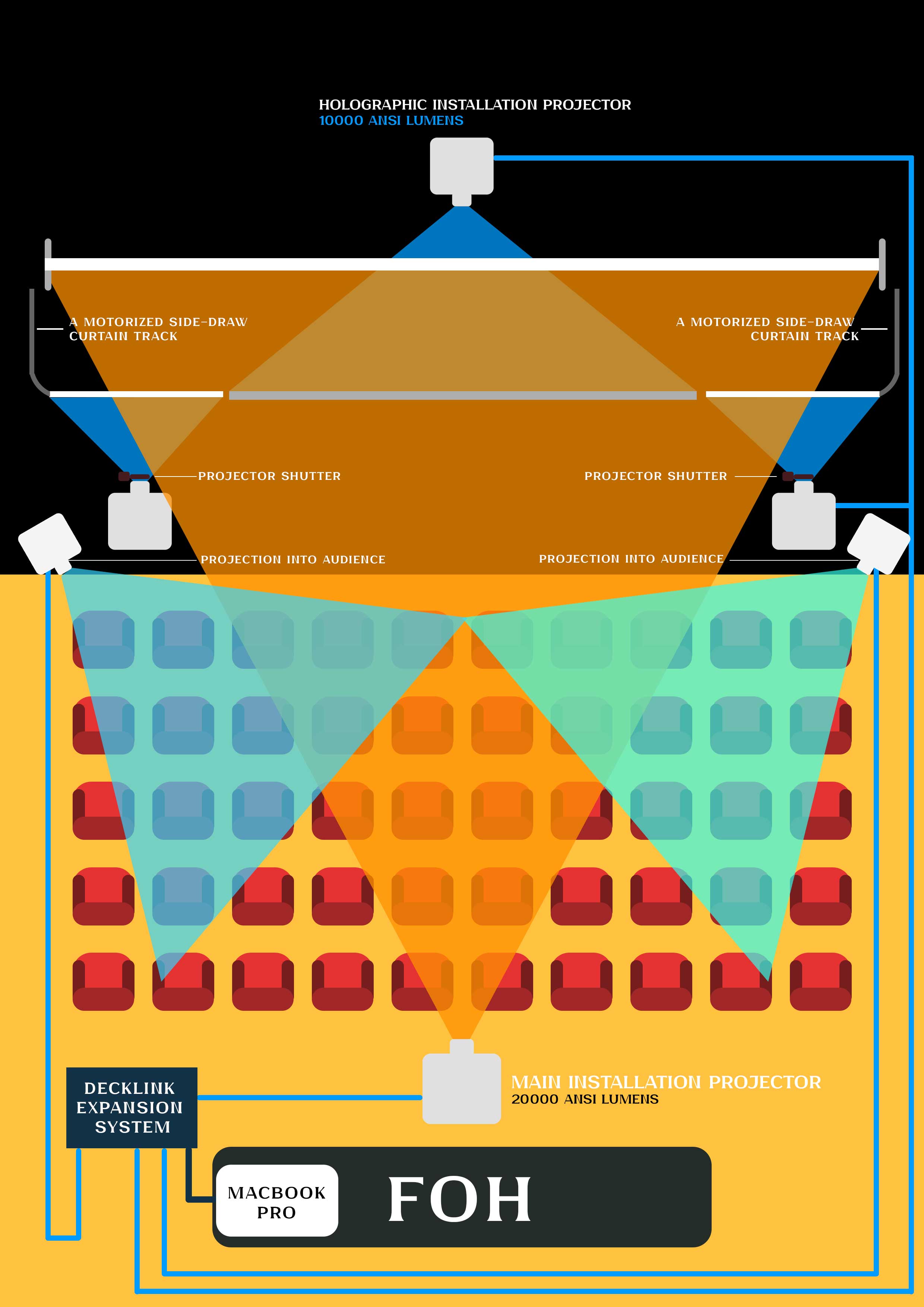
The visual system is mounted on a motorized side-draw curtain system with an L-shaped track configuration, allowing elements to be smoothly moved into and out of the performance area.
Using this system, a black holographic foil is horizontally drawn and retracted, enabling a 90° repositioning that frames and covers the area in which the performer is located. When not in use, the holographic foil can be fully retracted, keeping the stage visually clear.
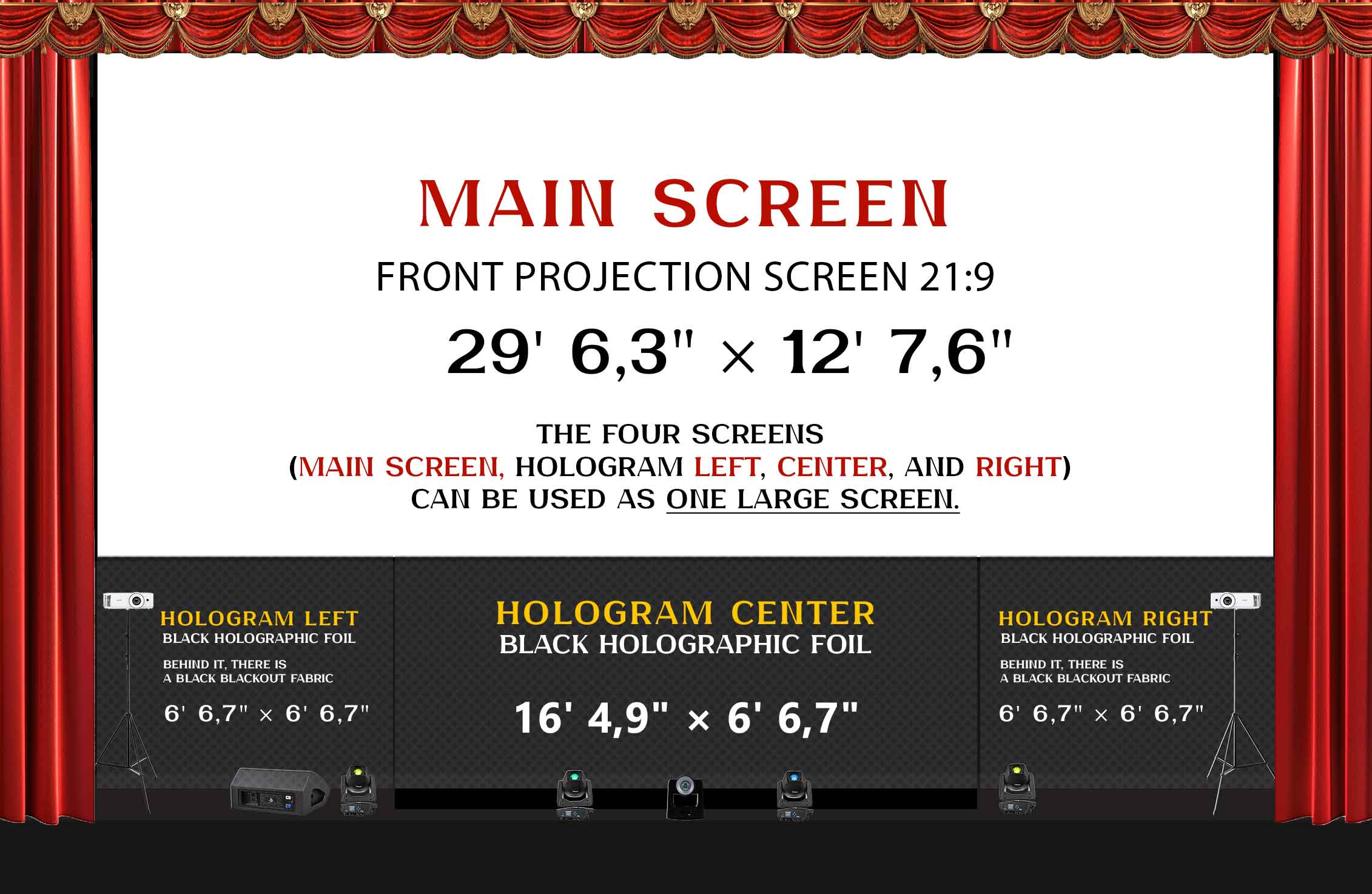
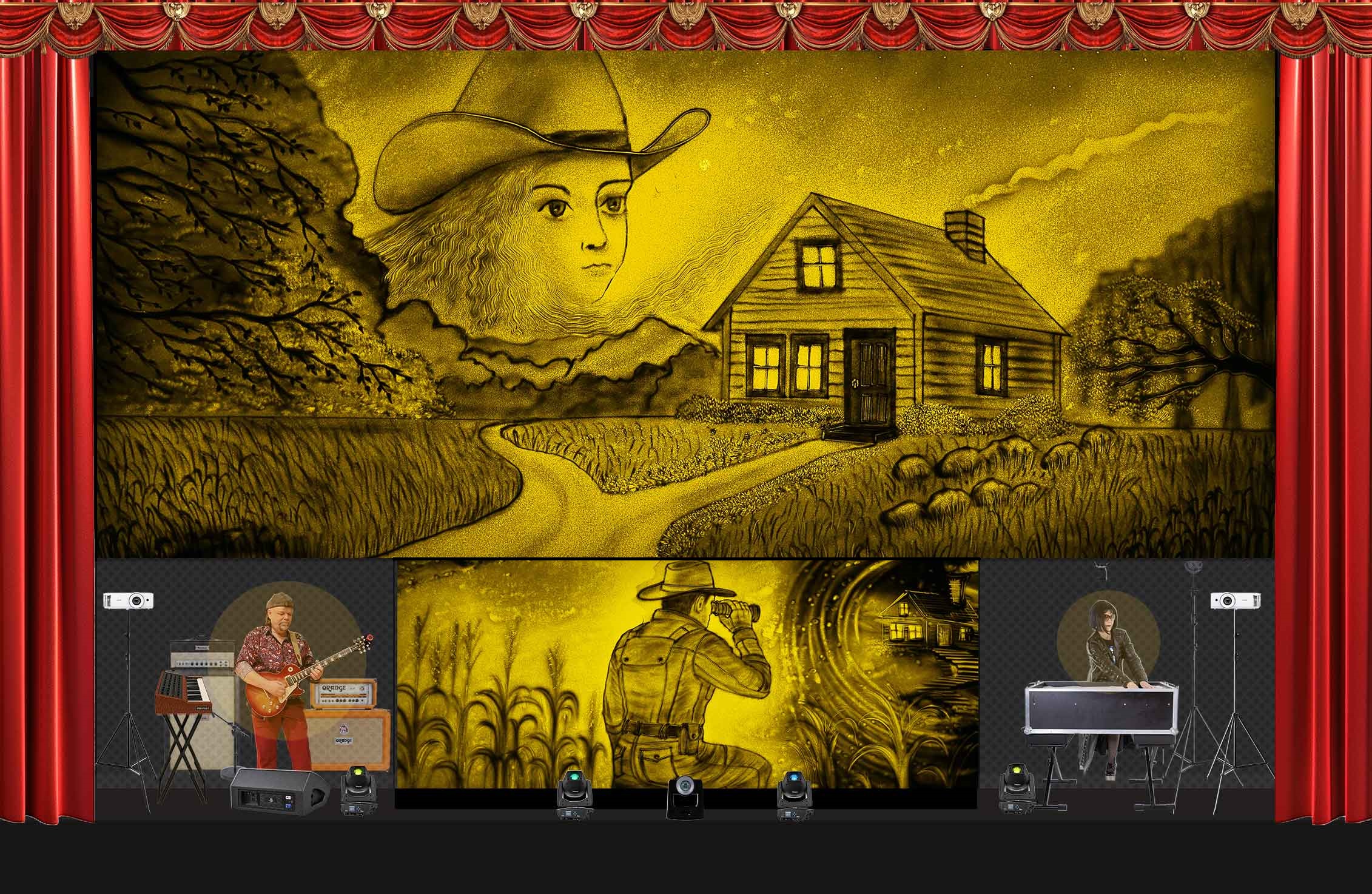
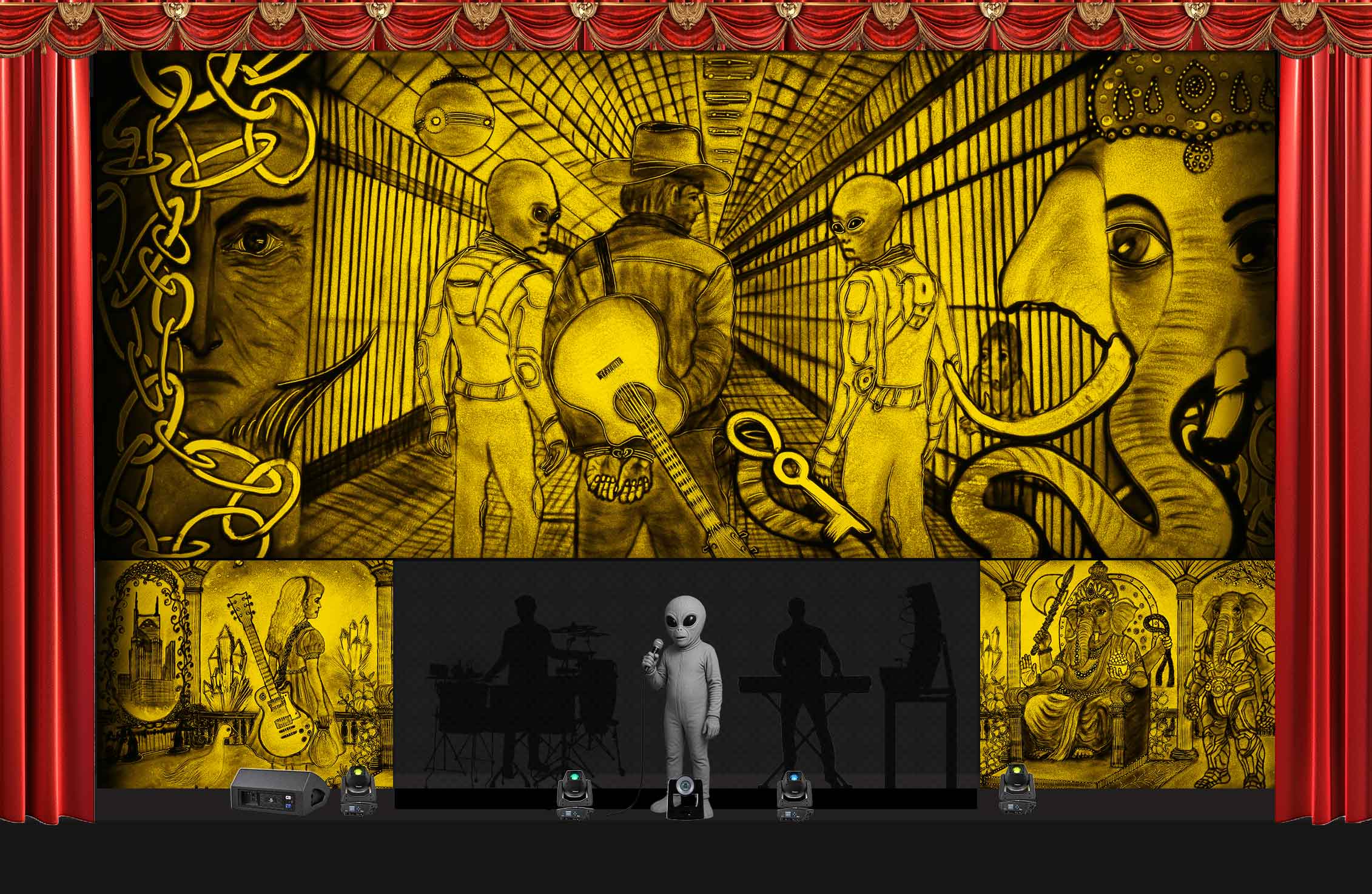
The purpose of this mechanism is to visually combine the lower stage area, consisting of three individual visual elements, into one continuous projection surface:
- Left projection surface
- Central black holographic foil
- Right projection surface
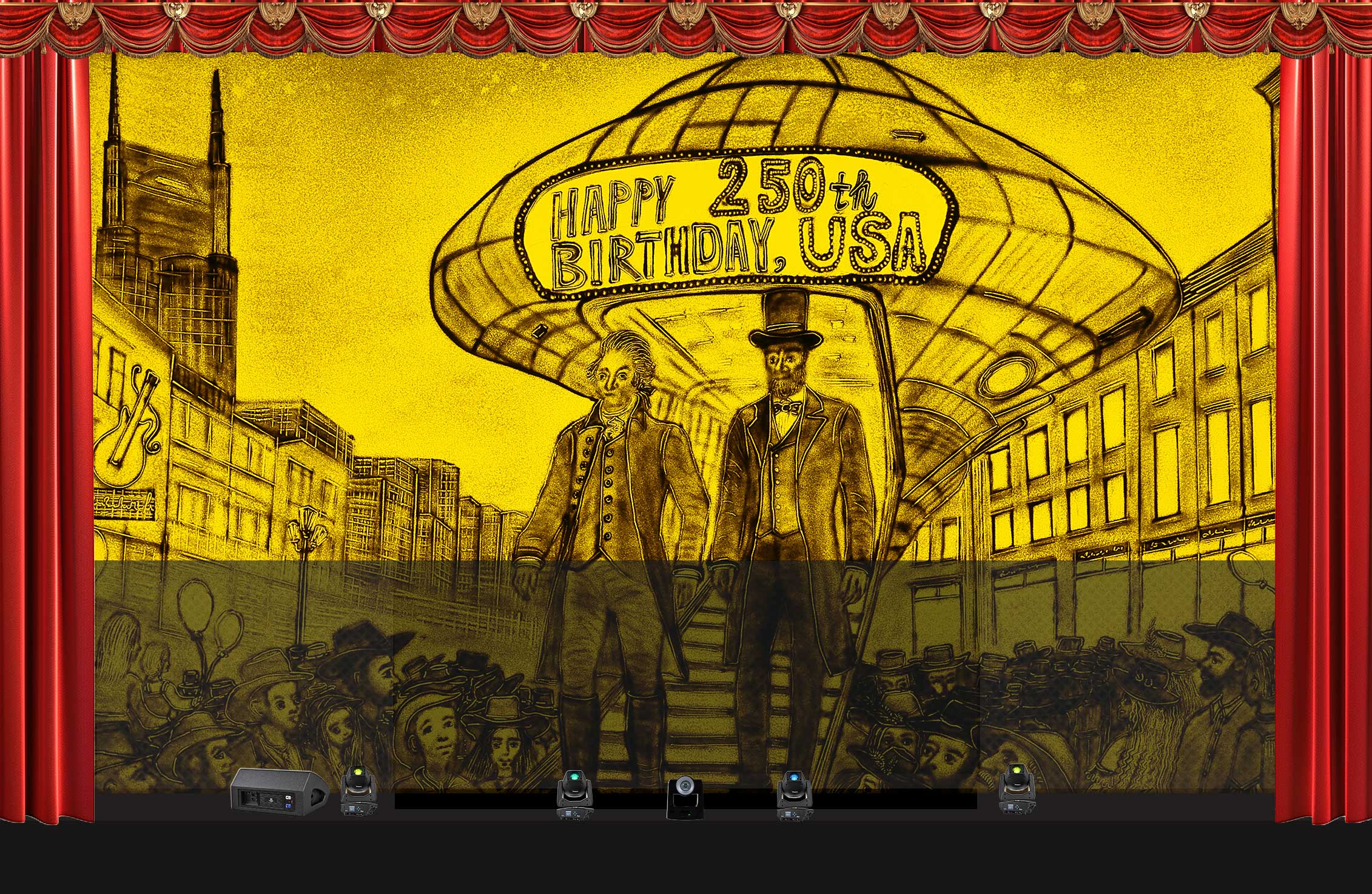
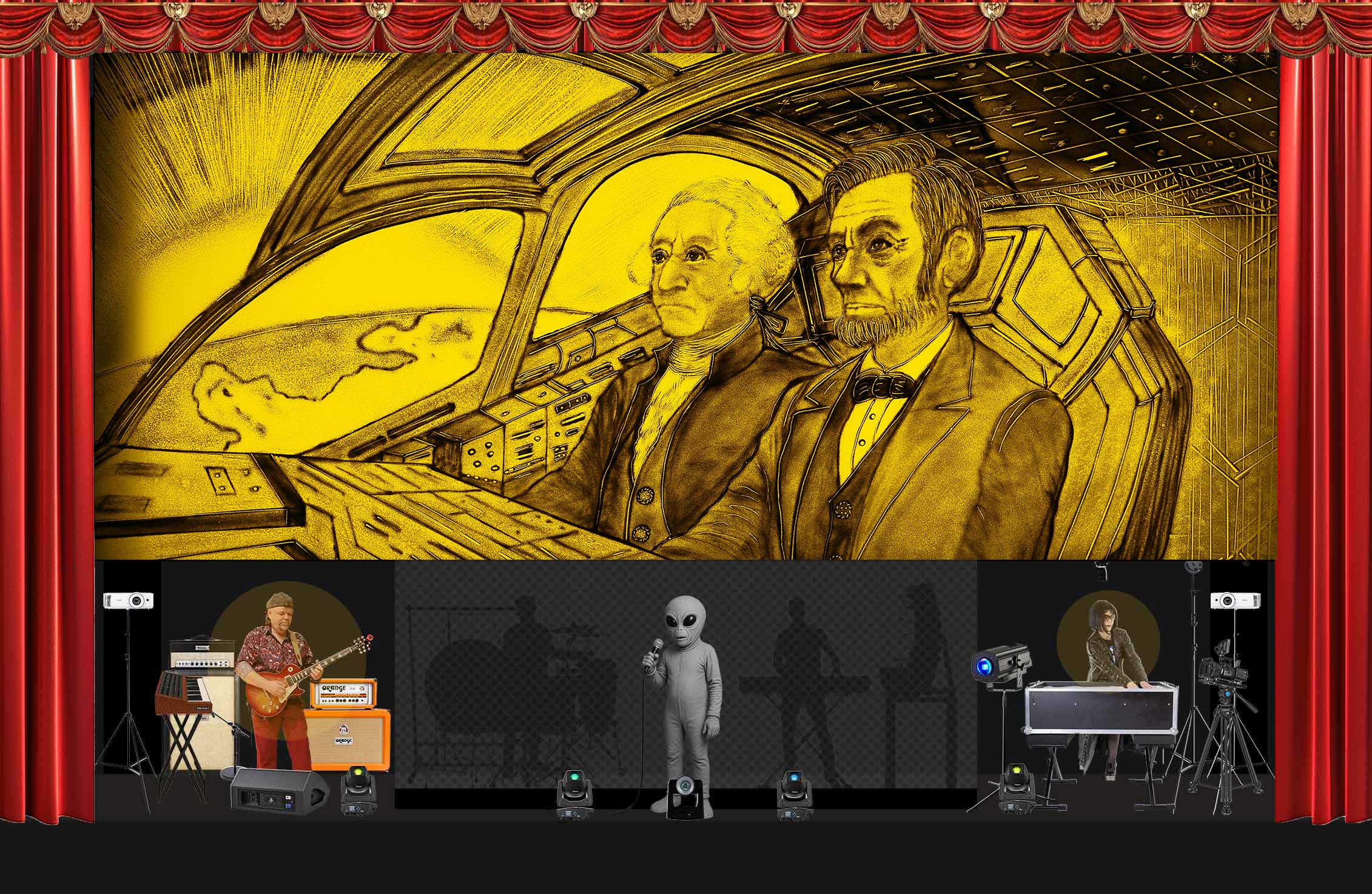
Together, these elements form a single ultra-wide visual screen.
In combination with the upper 21:9 visual solo element, this configuration creates the perception of an exceptionally large, unified image surface, effectively transforming the entire stage into one cohesive visual canvas.
The visual system is mounted on a motorized side-draw curtain system with an L-shaped track configuration, allowing elements to be smoothly moved into and out of the performance area.
Using this system, a black holographic foil is horizontally drawn and retracted, enabling a 90° repositioning that frames and covers the area in which the performer is located. When not in use, the holographic foil can be fully retracted, keeping the stage visually clear.
The purpose of this mechanism is to visually combine the lower stage area, consisting of three individual visual elements, into one continuous projection surface:
- Left projection surface
- Central black holographic foil
- Right projection surface
Together, these elements form a single ultra-wide visual screen.
In combination with the upper 21:9 visual solo element, this configuration creates the perception of an exceptionally large, unified image surface, effectively transforming the entire stage into one cohesive visual canvas.


.png)